
5
For years, the fashion landscape felt like an endless sprint. Social feeds flooded consumers with an exhausting rotation of microtrends, each demanding immediate adoption before vanishing into irrelevance weeks later. Closets grew crammed with inexpensive synthetic garments, yet people routinely stared into packed wardrobes feeling as though they had nothing to wear.
That mounting frustration sparked a quiet rebellion. Disillusioned by disposable clothing and relentless aesthetic turnover, modern style enthusiasts are turning toward minimalist fashion. This shift is far more than a passing preference for neutral tones; it represents a fundamental rethinking of how personal style intersects with consumerism, utility, and self-expression. By prioritizing timeless cuts, tangible material quality, and everyday versatility, minimalism is transforming modern dressing into a deliberate, satisfying ritual.
Overcoming Trend Fatigue and the Fast-Fashion Cycle
The rise of ultra-fast fashion accelerated trend cycles to an unsustainable pace. What used to be four distinct seasonal collections mutated into weekly drops engineered to trigger impulse buying. The inevitable result was trend fatigue. Shoppers began noticing that garments acquired during a viral hype cycle rarely retained their appeal past a single season, either losing their shape after three washes or looking dated the moment the internet moved on to the next aesthetic.
Minimalism provides immediate relief from this cycle of dissatisfaction. Choosing a minimalist wardrobe removes the frantic pressure to stay ahead of arbitrary seasonal mandates. Instead of asking what the algorithms are pushing this week, minimalist dressers focus on what fits their lifestyle, what feels comfortable across an eighteen-hour day, and what looks sharp regardless of the calendar year. This mental shift eliminates the decision fatigue that comes with managing an overcrowded closet, returning a sense of ease and intention to getting dressed each morning.
The True Anatomy of Modern Minimalist Style
A common misconception is that minimalist fashion requires wearing monochrome black or existing entirely within a palette of beige and gray. In reality, minimalism is not defined by the absence of color; it is defined by the absence of unnecessary noise. It strips away distracting graphics, garish logos, and decorative hardware in favor of clean architecture, purposeful silhouettes, and impeccable fit.
Silhouette, Tailoring, and Proportion
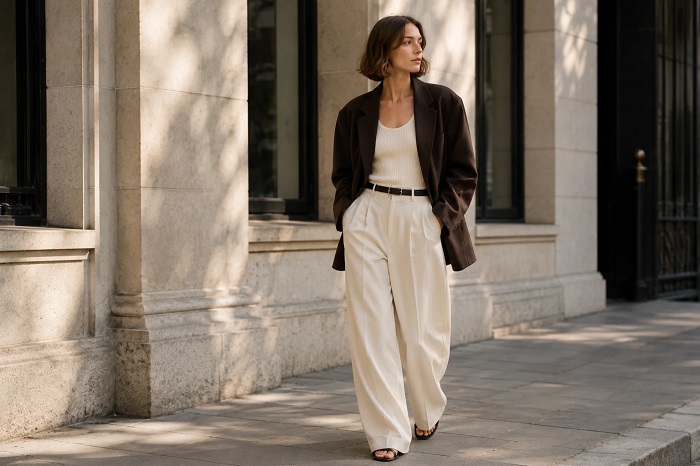
When an outfit lacks loud prints or prominent branding, the cut of each garment steps into the spotlight. Minimalist dressing leans heavily on considered proportions and intentional tailoring. A boxy, heavyweight cotton tee balances perfectly against wide-leg pleated wool trousers; an oversized, double-breasted coat adds clean drama to a fitted fine-gauge knit turtleneck. Clean lines draw the eye to the overall balance of the outfit rather than individual decorative accents, projecting an aura of effortless refinement.
Material Integrity and Tactile Depth
Because minimalist garments feature understated designs, the sensory quality of the textile carries the visual weight. Enthusiasts seek out natural, high-performance fabrics that drape elegantly and age gracefully:
-
Long-staple cotton: Dense poplin and substantial jersey knits that resist pilling, retain their structural silhouette, and soften naturally with every wash cycle.
-
Pure wool and cashmere: Breathable, temperature-regulating knits that provide subtle sheen, insulating warmth, and natural drape without adding excessive bulk.
-
Heavyweight linen and raw silk: Organic fibers that introduce rich, tactile texture and relaxed movement into warmer-weather wardrobes.
-
Full-grain leather: Supple, durable footwear and accessories that develop a rich patina over years of dedicated wear instead of cracking or peeling.
By focusing on texture rather than ornamentation, minimalist outfits feel dynamic and dimensional while remaining visually serene.
The Compelling Math of Cost-per-Wear
Transitioning to a minimalist wardrobe fundamentally alters how one evaluates value. Traditional discount retail encourages consumers to view value solely through the lens of initial ticket price, ignoring longevity and practical utility. Minimalist fashion champions the principle of cost-per-wear, reframing garment acquisition as a long-term investment.
Consider the arithmetic of daily dressing. A fast-fashion trench coat purchased for sixty dollars might only survive four outings before the seams fray, the buttons loosen, or the polyester lining tears, yielding a cost-per-wear of fifteen dollars. Conversely, a finely tailored cotton-gabardine trench coat purchased for six hundred dollars that remains a seasonal staple for a decade and sees four hundred wears works out to a mere dollar and fifty cents per wear.
Investing in superior craftsmanship saves money over time, but it also delivers an intangible dividend: the daily confidence that comes from wearing clothing built to exceptional structural standards. Modern style enthusiasts are recognizing that fewer, superior pieces always outperform an endless mountain of mediocre options.
Mindful Consumption and Environmental Reality
The environmental toll of global textile overproduction has become impossible to ignore. Millions of tons of synthetic, non-biodegradable clothing end up incinerated or dumped in landfills each year, while chemical dyeing processes pollute vital freshwater ecosystems.
Minimalist fashion serves as a practical, individual antidote to this systemic waste. Modern style enthusiasts increasingly view their purchasing choices as an expression of personal values. Choosing to buy fewer, higher-quality pieces naturally reduces consumer demand for exploitative supply chains.
Furthermore, minimalist garments have an extended lifecycle. Because classic silhouettes do not expire with the trend cycle, they retain their resale value across secondary luxury marketplaces and pass easily between owners. Embracing slow fashion does not mean abandoning personal aesthetics; it simply aligns style with sustainability.
Uncovering Authentic Personal Style
Perhaps the most compelling argument for minimalist dressing is that it demands deep self-awareness. Loud logos, overt branding, and hyper-trendy items often serve as aesthetic crutches, allowing the brand’s identity to overshadow the wearer.
When you remove those commercial distractions, you are forced to figure out who you actually are in your clothes. Minimalist fashion highlights the individual. It draws attention to how a person carries themselves, how their posture anchors an unbuttoned blazer, and how subtle styling gestures—a tucked hem, a rolled cuff, or a single vintage watch—convey personal discernment.
By building a wardrobe centered on permanence, craftsmanship, and effortless function, modern style enthusiasts are not retreating from fashion. They are mastering it, proving that genuine style never needs to shout to make an unforgettable impression.
